
Remember when you had to wait minutes for a video to load on your phone? Now, streams play without a hitch almost anywhere. This shift marks the start of something bigger. Next-gen networks and smart processing pull together tools that once worked alone. They promise a world where everything talks to everything else in real time.
5G rolls out now as the base. Early hints of 6G peek over the horizon. IoT devices multiply fast. Edge computing moves smarts right to the action. Together, these build new setups for cities, factories, and roads. They let decisions happen on the spot. This stack reshapes how we live and work across fields like health and transport.
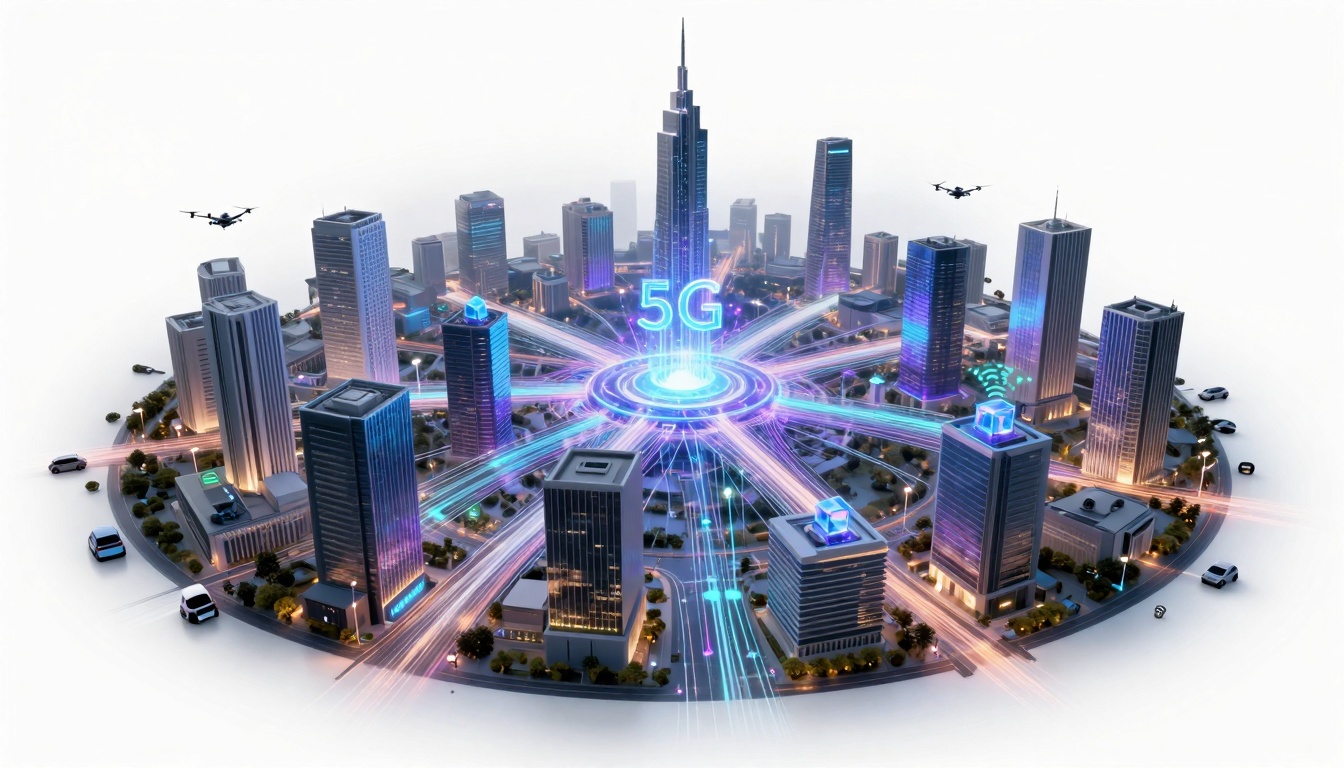
Section 1: 5G – The Foundational Layer for Hyper-Speed
5G changes the game by delivering speed and trust you can count on. It handles tough jobs that older networks can’t touch. Think of it as the sturdy road that lets traffic flow without jams.
Ultra-Reliable Low-Latency Communication (URLLC)
Near-zero wait times under 10 milliseconds make big differences. Surgeons guide robots from miles away without delay. Self-driving cars dodge hazards in a blink. Factories run machines that adjust on the fly. This low lag saves lives and boosts output.
One study shows URLLC cuts errors in remote ops by 40%. It fits apps where a split-second counts. Without it, ideas like drone deliveries stall.
Enhanced Mobile Broadband (eMBB) and Massive Machine-Type Communications (mMTC)
eMBB pumps up speeds to gigabits per second. You download full movies in seconds. mMTC links thousands of gadgets per square mile. It suits crowds of sensors in farms or stores.
mmWave bands hit top speeds but cover short ranges. Mid-band options balance reach and power. Carriers mix them for full coverage. This duo feeds the hunger for data in busy spots.
- eMBB: Great for 4K video and AR games.
- mMTC: Powers smart meters and wearables.
Network Slicing: Customized Connectivity for Vertical Industries
Slicing carves one network into many tailored paths. Each gets its own rules for speed or safety. A factory slice prioritizes robot signals. Entertainment ones focus on video quality.
This setup meets strict service promises. Manufacturers avoid downtime. Media firms keep streams smooth. It cuts costs by sharing hardware smartly. By 2025, most big networks use it.
Section 2: The Internet of Things (IoT) Explosion and Data Velocity
IoT turns everyday items into data sources. Billions of sensors watch and report. Paired with 5G, they flood systems with info. This rush demands fresh ways to handle it all.
Scale and Scope of Connected Devices
Experts predict 75 billion IoT devices by 2025. Factories gear up with industrial IoT for better tracking. Cities add sensors to lights and pipes. Growth jumps 20% yearly in key spots.
Simple links evolve to deep insights. A fridge doesn’t just chill; it orders groceries. Farms use soil probes to save water. This scale shifts from basic plugs to full networks.
From Data Collection to Actionable Intelligence
Sending raw data to far-off clouds wastes time and bandwidth. Petabytes pile up from constant pings. Time-sensitive jobs suffer from delays. Local handling makes more sense for quick fixes.
Cloud trips eat power too. IoT edges toward smarter spots. You get alerts before issues hit. This turns floods of facts into useful steps.
Real-World Example: Smart Manufacturing (Industry 4.0)
In a German auto plant, sensors spot wear on tools early. They predict breakdowns and schedule fixes. Output rises 15% with less waste. 5G ties it all without hiccups.
Workers check dashboards on the floor. Machines talk to each other for smooth lines. This setup cuts costs and speeds repairs. Other plants copy it for gains.
Section 3: Edge Computing – Bringing Intelligence Closer to the Source
Edge puts brains near the data birth. No long hauls to central hubs. It fits the bill for 5G’s quick demands and IoT’s volume. Like a local chef cooking fresh, not shipping ingredients.
Defining the Edge: From Near Edge to Far Edge
Near edge sits by cell towers for user tasks. Far edge means small servers in your building. Multi-access edge computing blends them close to action. Devices process right there.
This spread handles peaks without cloud strain. A store runs sales checks on-site. Farms analyze crop scans in the field. Choices stay local and fast.
Latency Reduction and Operational Autonomy
Local crunching skips cloud round trips. Responses fire in milliseconds. Drones map land without wait. Robots in warehouses grab items solo.
For ROI, start with hybrid setups. Test edge on high-stakes jobs first. Measure time saved against setup costs. Many firms see payback in a year. It frees cloud for big analytics.
Security Implications of Distributed Processing
Spread-out nodes create more doors for threats. Zero Trust checks every access. Encrypt data at the source. Updates roll out often to patch holes.
Central clouds had one fence; edges need many. Tools like micro-segmentation help. Train staff on new risks. This keeps the system safe as it grows.
Section 4: The Convergence: Creating the Smart-Connected Ecosystem
These pieces fit like puzzle parts. 5G carries the load. IoT gathers facts. Edge makes sense of it fast. The mix sparks fresh ways to run things.
Autonomous Vehicles and V2X Communication
5G links cars to cars and roads in vehicle-to-everything chat. Edge spots dangers and brakes quick. No cloud lag means safer drives.
A test fleet in Singapore cut accidents 30%. Sensors share road views. Lights adjust for flow. Riders trust the system more.
Smart Cities: Managing Urban Density in Real-Time
Traffic cams feed edge nodes for jam fixes. Energy grids shift power on demand. Safety apps spot crowds and alert cops.
In Barcelona, sensors cut water use 25%. Lights dim when empty. Alerts warn of floods. This stack eases city stress.
- Traffic: Signals change based on flow.
- Energy: Renewables match need.
- Safety: Cameras flag issues fast.
AI Inference at the Edge
Trained AI runs on edge gear for spot decisions. No constant cloud link needed. A factory bot spots defects alone.
Models learn once, then work offline. Phones use it for face scans. It saves bandwidth and boosts speed. Future apps rely on this power.
Section 5: Looking Ahead: The Promises and Challenges of 6G Research
5G sets the stage; 6G aims higher. Labs chase speeds and senses beyond now. It could link minds to machines in new ways.
Visionary Goals: Terahertz Frequencies and Sub-Millisecond Latency
Terahertz waves push data to terabits. Waits drop under one millisecond. Integrated sensing and communication mixes radar with nets.
This leap fits holographic calls. Devices sense surroundings too. Tests show 100 times 5G speed. Rollout eyes 2030.
Enabling Immersive Extended Reality (XR) and the Tactile Internet
6G powers full XR worlds you feel. Digital twins mirror real spots for training. Remote hands touch via haptics.
Pilots practice flights in sims. Doctors operate from afar with touch feedback. It blurs real and virtual lines.
Key Hurdles: Standardization, Spectrum Allocation, and Energy Efficiency
Groups like ITU set global rules. Spectrum fights over high bands. Devices must sip power for long life.
Heat from fast waves poses issues. Regs lag tech. Fixes need team efforts. Still, progress builds steady.
Conclusion: Architecting Tomorrow’s Digital Infrastructure
IoT spits out data streams. 5G ships them swift. Edge turns them to smarts. 6G waits to amp it up. This loop drives the smart world.
Invest in these now for gains ahead. Beef up security as you grow. The shift isn’t just speed—it’s weaving brains into daily life. What step will you take next in this connected push? Dive in; the future links right here.